Faith & Spirituality9 min read
The Power of Istighfar: 70+ Times a Day and Its Transformative Effects
Discover how the simple act of seeking Allah's forgiveness can transform your heart, remove anxiety, and open doors of provision you never imagined.
Prayr Team · Islamic Content
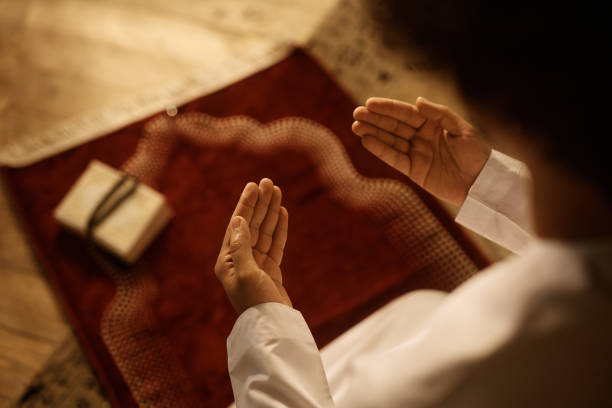
The Lifeline of the Believer
Istighfar — seeking the forgiveness of Allah — is one of the most powerful, yet most underestimated, acts of worship in a Muslim's daily life. It costs nothing, requires no wudu, no specific posture, and no particular time, yet its rewards are immeasurable. The Prophet Muhammad (peace be upon him) himself, despite being guaranteed Paradise, sought Allah's forgiveness more than seventy times every single day.
In an age of constant distraction and spiritual emptiness, istighfar acts as an anchor for the soul. It reconnects us with our Creator, cleanses the heart from the residue of sin, and opens pathways of mercy and provision that we might never have expected. Whether you are going through hardship or enjoying ease, istighfar should be your constant companion.
By Allah, I seek the forgiveness of Allah and I turn to Him in repentance more than seventy times each day.
— Sahih al-Bukhari 6307, narrated by Abu Hurairah
What Does Istighfar Really Mean?
The Arabic word istighfar comes from the root gh-f-r (غ ف ر), which means to cover, shield, and protect. When we say "Astaghfirullah," we are literally asking Allah to cover our sins, shield us from the consequences of our shortcomings, and protect us from the punishment that our transgressions deserve. It is an admission of human weakness and a turning toward divine mercy.
Istighfar is not merely a verbal utterance. True istighfar involves three components: acknowledging the sin, feeling genuine remorse, and resolving not to return to it. When these three elements converge with a sincere tongue, the gates of mercy swing wide open. Scholars have noted that istighfar without remorse is the "istighfar of liars" — the tongue seeks forgiveness while the heart remains attached to sin.
Quranic Evidence for the Power of Istighfar
And said, "Ask forgiveness of your Lord. Indeed, He is ever a Perpetual Forgiver. He will send rain to you in abundance and give you increase in wealth and children and provide for you gardens and provide for you rivers."
— Quran 71:10-12 — Prophet Nuh (peace be upon him) to his people
In these remarkable verses, Prophet Nuh (peace be upon him) connects istighfar directly to tangible worldly blessings: rain, wealth, children, gardens, and rivers. This is not a metaphor — the scholars of tafsir explain that Allah literally opens the doors of provision when a servant sincerely turns to Him in repentance. Imam al-Qurtubi noted that this passage is one of the strongest proofs that istighfar is a means of rizq (sustenance).
Hasan al-Basri, the great tabi'i, was once approached by a man complaining of drought. He told him: "Seek forgiveness from Allah." Another man came complaining of poverty, and he gave the same advice. A third came lamenting that he had no children — again the answer was istighfar. When asked why he gave the same prescription for different ailments, he recited these very verses of Surah Nuh.
The Benefits of Consistent Istighfar
- 1. Forgiveness of sins — both major and minor, when combined with sincere tawbah and the conditions of repentance.
- 2. Relief from anxiety and depression — the Prophet (peace be upon him) said: "Whoever makes istighfar his regular practice, Allah will make a way out of every difficulty and relief from every anxiety." (Abu Dawud 1518)
- 3. Increase in sustenance and provision — as explicitly stated in Surah Nuh (71:10-12).
- 4. Protection from punishment — Allah says: "But Allah would not punish them while you are among them, and Allah would not punish them while they seek forgiveness." (Quran 8:33)
- 5. A clean and polished heart — sins create black spots on the heart (ran), and istighfar wipes them away before they accumulate.
- 6. Elevation of rank in the Hereafter — each act of istighfar is recorded as a good deed, and the replacement of sins with good deeds raises one's station.
The combined effect of these benefits is nothing short of life-changing. Muslims who have made istighfar a regular practice often report a profound sense of inner peace, a lightness in the chest, and an inexplicable ease in their affairs. This is not coincidence — it is a divine promise fulfilled.
Ibn Taymiyyah once said: "I sometimes find a matter difficult, so I seek forgiveness a thousand times — or more or less — until my chest opens and the difficulty is resolved." If one of the greatest scholars in Islamic history relied on istighfar to overcome intellectual and spiritual obstacles, how much more do ordinary believers need it in their daily struggles?
The Best Times for Istighfar
- At the time of suhoor (pre-dawn) — Allah praises "those who seek forgiveness in the early hours of the morning" (Quran 3:17).
- After every salah — the Prophet (peace be upon him) would say "Astaghfirullah" three times after concluding prayer (Sahih Muslim 591).
- Before sleeping — as part of the evening adhkar, seeking forgiveness ensures you sleep in a state of spiritual purity.
- During prostration (sujud) — when you are closest to Allah, let your tongue be moist with repentance.
- After committing a sin — immediate istighfar prevents the sin from settling into the heart and becoming habitual.
While these are the most virtuous times, remember that istighfar has no restrictions. You can seek forgiveness while driving, cooking, walking, or lying in bed. The beauty of this worship is its absolute accessibility — no barriers stand between you and the mercy of Allah.
Recommended Formulas of Istighfar
- 1. Astaghfirullah (أستغفر الله) — "I seek the forgiveness of Allah." The simplest and most commonly used form.
- 2. Astaghfirullaha wa atubu ilayh (أستغفر الله وأتوب إليه) — "I seek the forgiveness of Allah and I turn to Him in repentance." This was the form the Prophet (peace be upon him) used most frequently.
- 3. Sayyid al-Istighfar: "Allahumma Anta Rabbi, la ilaha illa Ant, khalaqtani wa ana abduk, wa ana ala ahdika wa wa'dika mastata't. A'udhu bika min sharri ma sana't. Abu'u laka bi ni'matika alayya wa abu'u bi dhanbi, faghfir li, fa innahu la yaghfiru al-dhunuba illa Ant." — The Master of Seeking Forgiveness (Sahih al-Bukhari 6306). The Prophet said whoever recites it sincerely during the day and dies that evening will be among the people of Paradise.
- 4. Rabbi ighfir li wa tub alayya innaka Anta al-Tawwabu al-Rahim (رب اغفر لي وتب عليّ إنك أنت التواب الرحيم) — "My Lord, forgive me and accept my repentance. Surely You are the Accepting of Repentance, the Most Merciful." A beautiful comprehensive formula.
Each of these formulas carries immense weight. The Sayyid al-Istighfar in particular is considered the most complete form of seeking forgiveness, as it encompasses praise of Allah, acknowledgement of servitude, recognition of blessings, confession of sin, and a plea for mercy — all in a single supplication.
Building the Istighfar Habit
Start with a modest daily target — say one hundred times of "Astaghfirullah" spread throughout the day. Use your morning commute, waiting times, and quiet moments before sleep. You do not need to set aside special time; simply replace idle scrolling or aimless thought with the remembrance of Allah. Many people find that using a digital tasbeeh counter or the Prayr app's dhikr tracker helps them stay consistent.
Consistency is far more important than quantity. The Prophet (peace be upon him) said: "The most beloved deeds to Allah are those done consistently, even if they are small." (Sahih al-Bukhari 6464). Better to say istighfar thirty times every single day for a year than to say it a thousand times once and then forget about it.
Stories of Repentance from the Companions
The story of Ka'b ibn Malik (may Allah be pleased with him) is one of the most moving accounts of repentance in Islamic history. Ka'b was one of three Companions who failed to join the expedition of Tabuk without a valid excuse. Rather than fabricating a lie as the hypocrites did, he chose to tell the Prophet (peace be upon him) the truth. For fifty days, the Muslim community boycotted him — no one would speak to him, his wife was sent away, and the earth felt narrow despite its vastness.
Then the revelation came: "And He also turned in mercy to the three who were left behind... until the earth, despite its vastness, closed in on them, and their own souls closed in on them, and they knew there was no refuge from Allah except in Him. Then He turned to them so they could repent. Indeed, Allah is the Accepting of Repentance, the Most Merciful." (Quran 9:118). Ka'b described the moment he heard this verse as the happiest day of his life after Islam. His sincerity in repentance earned him eternal honor in the Quran.
Conclusion
Istighfar is not a ritual reserved for the sinful — it is the constant companion of the righteous. The more you know Allah, the more you realize your need for His forgiveness. Make istighfar your default state of being, and watch as Allah transforms your life from the inside out: anxiety gives way to tranquility, scarcity to abundance, and distance from Allah to nearness and love.