Ramadan9 min read
Suhoor and Iftar: Prophetic Foods, Nutrition Tips, and Du'as for the Fast
A practical guide to eating well during Ramadan — from the blessings of suhoor to prophetic iftar traditions, with du'as and nutrition advice.
Prayr Team · Islamic Content
Introduction: Fueling Your Fast with Intention
Ramadan is not just about abstaining from food and drink — it is about how, when, and why you eat when the time comes. The two meals of Ramadan — suhoor (pre-dawn meal) and iftar (breaking the fast) — are acts of worship in themselves when performed with the right intention and in accordance with the Sunnah. How you nourish your body directly affects your ability to worship, focus in prayer, and maintain energy throughout the month.
The Blessing of Suhoor
Have suhoor, for indeed in suhoor there is barakah (blessing).
— Sahih al-Bukhari 1923 and Sahih Muslim 1095
This hadith is clear and emphatic: suhoor contains barakah — a divine blessing that goes beyond the nutritional value of the food. Skipping suhoor is not a sign of extra piety; it is actually against the Sunnah. The Prophet (peace be upon him) consistently ate suhoor and encouraged his companions to do so as well. He also said: "The difference between our fasting and the fasting of the People of the Book is the meal of suhoor" (Muslim).
Timing of Suhoor
The Sunnah is to delay suhoor as close to Fajr as possible, without cutting it so close that you risk eating after the time enters. Anas (may Allah be pleased with him) reported that the Prophet (peace be upon him) and Zayd ibn Thabit ate suhoor together, and the gap between them finishing and the iqamah of Fajr was about 50 verses of Quran (approximately 15-20 minutes). This gives you the maximum benefit of a late meal while leaving comfortable time for Fajr prayer.
Recommended Suhoor Foods
- Oats or whole grain bread — complex carbohydrates that release energy slowly throughout the day, preventing mid-morning crashes.
- Eggs — high in protein and healthy fats, they keep you feeling full for hours and are quick to prepare.
- Dates — the Prophet (peace be upon him) said: "How excellent are dates as the believer's suhoor" (Abu Dawud). Rich in natural sugars, fiber, and potassium.
- Bananas — packed with potassium and slow-releasing energy. They also help retain water, reducing thirst during the fast.
- Yogurt or labneh — probiotics support digestion and protein provides sustained energy. Pair with honey for a prophetic combination.
- Avocado — healthy fats keep you satiated, and the high water content helps with hydration.
- Water and hydrating fluids — drink at least 2-3 glasses of water at suhoor. Herbal teas and milk are also excellent choices.
Foods to Avoid at Suhoor
- Excessively salty foods (chips, pickles, processed meats) — they increase thirst dramatically during the fast.
- Sugary cereals and pastries — they cause a rapid blood sugar spike followed by a crash that leaves you exhausted by mid-morning.
- Caffeinated drinks in excess — while a small cup of coffee or tea is fine, excessive caffeine is a diuretic that dehydrates you.
- Heavy fried foods — they are difficult to digest, cause acid reflux, and contribute to lethargy rather than sustained energy.
- Very spicy foods — they can cause heartburn and discomfort during the fasting hours, especially when your stomach is empty.
Prophetic Foods for Ramadan
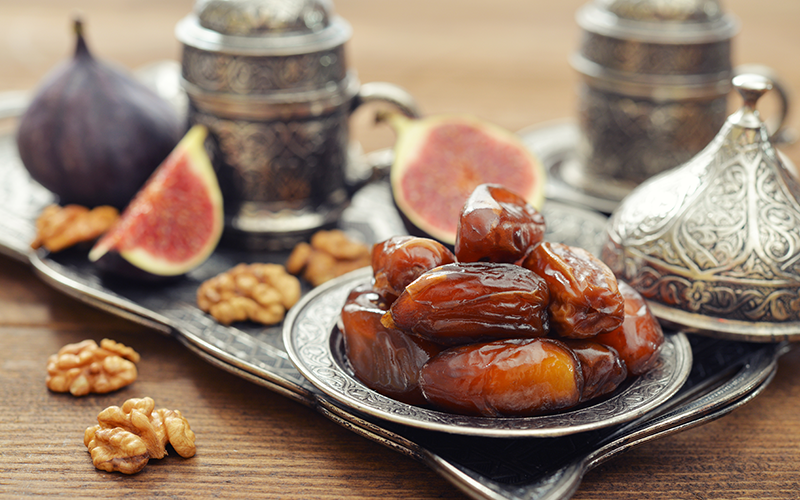
- Dates (Tamr) — Nature's perfect fast-breaker. Rich in glucose, fiber, and potassium. The Prophet always broke his fast with dates.
- Honey — Described as a healing in the Quran (An-Nahl 16:69). Antibacterial, soothes the digestive system, boosts immunity.
- Olive oil — "Eat olive oil and anoint yourselves with it, for it comes from a blessed tree" (Tirmidhi). Anti-inflammatory and heart-healthy.
- Black seed (Habbatus Sauda) — "A cure for every disease except death" (Bukhari). Add to honey, yogurt, or bread.
- Barley (Talbina) — A warm barley porridge the Prophet recommended for the sick and grieving. Soothes the stomach and provides slow-release energy.
- Milk — A complete food the Prophet regularly consumed. Calcium, protein, and hydration in one glass.
- Watermelon — The Prophet ate watermelon with dates. High water content makes it perfect for hydration at iftar.
Breaking the Fast: Iftar Etiquette
The Sunnah is to hasten breaking the fast as soon as the Maghrib adhan is called. The Prophet (peace be upon him) said: "The people will remain upon goodness as long as they hasten to break their fast" (Bukhari and Muslim). Delaying iftar unnecessarily is against the Sunnah and was a practice associated with those whom Islam distinguished itself from.
The Prophet (peace be upon him) used to break his fast with fresh dates before praying. If there were no fresh dates, then with dried dates. If there were no dried dates, then with a few sips of water.
— Abu Dawud 2356 — graded sahih
The Du'a When Breaking Fast
The moment of breaking the fast is one of the times when du'a is most readily accepted. The Prophet (peace be upon him) said: "The fasting person has a du'a at the time of breaking fast that is not rejected" (Ibn Majah). Do not waste this precious moment — have your du'as ready before the adhan.
Dhahaba al-dhama'u wabtallatil-'uruqu wa thabatal-ajru in sha Allah — The thirst has gone, the veins have been moistened, and the reward is assured, if Allah wills.
— Abu Dawud 2357 — graded hasan
Hydration Strategy for Ramadan
Balancing Worship and Health
Some Muslims push themselves so hard during Ramadan — minimal sleep, poor nutrition, excessive exertion — that they become physically ill or unable to worship by the last ten nights, which are the most important. This defeats the purpose. The Prophet (peace be upon him) said: "Your body has a right over you" (Bukhari). Eat nutritious suhoor, break your fast wisely, sleep adequately, and you will have the energy to maximize your worship throughout the entire month.
Meal Planning Tips
- Plan a weekly iftar menu to avoid daily decision fatigue and reduce food waste.
- Batch-cook and freeze soups, stews, and samosas before Ramadan to save time during the month.
- Keep iftar simple on weeknights — the Prophet's iftar was often just dates and water followed by a modest meal.
- Prepare suhoor the night before so the morning routine is efficient and stress-free.
- Involve the whole family in meal preparation to distribute the workload and reduce the burden on one person.