Mental Wellness11 min read
Dealing with Anxiety and Worry: Du'as, Trust in Allah, and Action
An Islamic framework for managing anxiety — combining powerful du'as, deep trust in Allah (tawakkul), and practical steps toward mental wellness.
Prayr Team · Islamic Content
Introduction: Anxiety in the Light of Faith
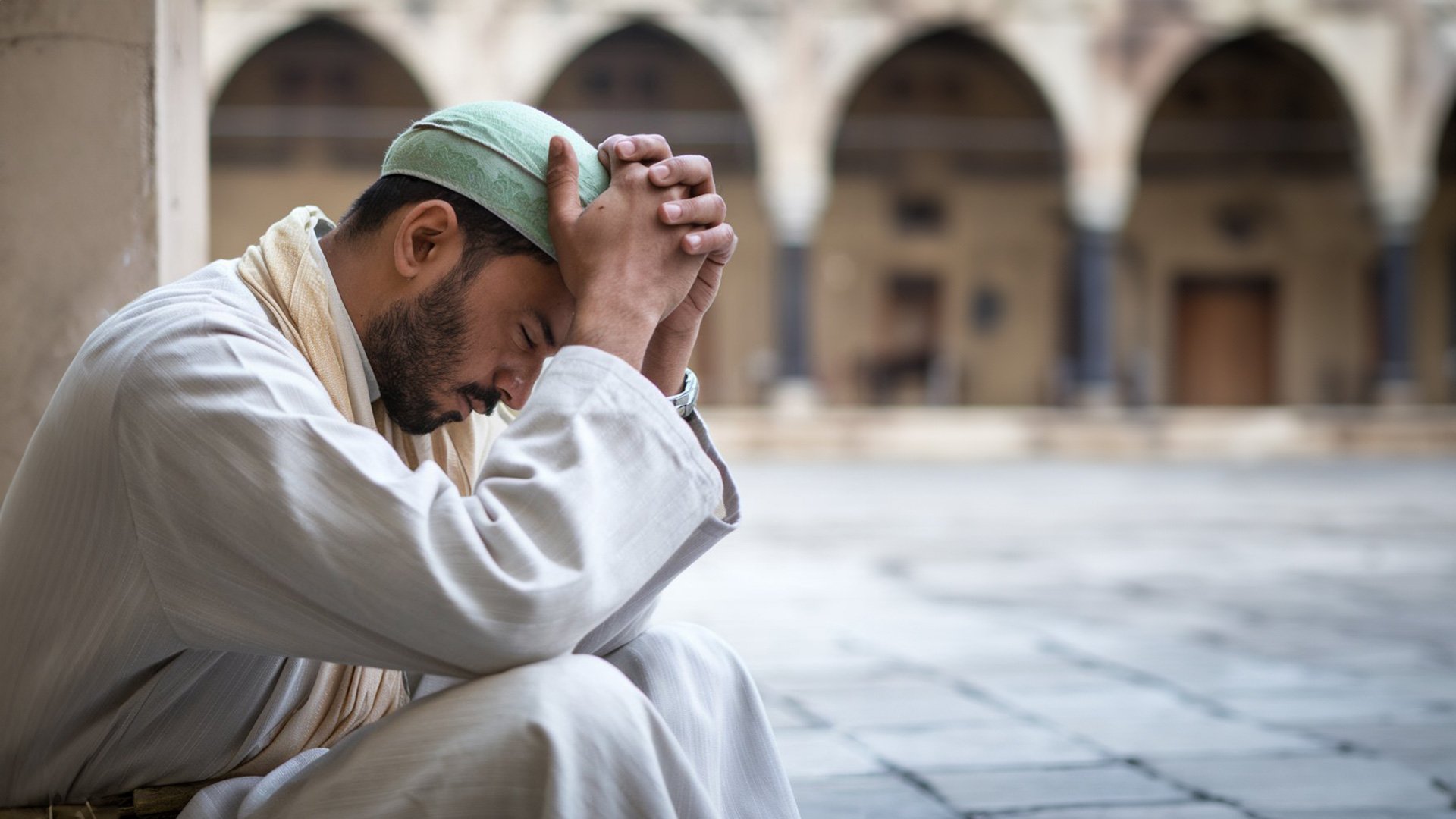
Anxiety, worry, and sadness are part of the human experience — even the prophets felt them. The Prophet Muhammad (peace be upon him) experienced profound grief during the Year of Sorrow when he lost both his wife Khadijah and his uncle Abu Talib. The Quran itself acknowledges that the human soul is inclined toward worry, and Islam provides both spiritual and practical tools to manage it.
Tawakkul: True Reliance on Allah
And whoever puts their trust in Allah, then He will suffice him. Indeed, Allah will accomplish His purpose. Allah has already set for everything a decreed extent.
— Quran 65:3 (At-Talaq)
Tawakkul is often misunderstood as passive resignation — simply saying "I trust Allah" while doing nothing. True tawakkul is the opposite: it means taking every practical step within your ability and then entrusting the outcome to Allah. The Prophet (peace be upon him) illustrated this perfectly when a man asked whether he should tie his camel or trust in Allah. He replied: "Tie your camel, then trust in Allah" (Tirmidhi).
Du'as for Anxiety and Distress
- The du'a of distress: "La ilaha illallah al-'Adheem al-Haleem, la ilaha illallah Rabb al-'Arsh al-'Adheem, la ilaha illallah Rabb al-samawati wa Rabb al-ard wa Rabb al-'Arsh al-Kareem" — There is no god but Allah, the Magnificent, the Forbearing. There is no god but Allah, Lord of the Mighty Throne. There is no god but Allah, Lord of the heavens, Lord of the earth, and Lord of the Noble Throne. (Bukhari and Muslim)
- The du'a for anxiety and sorrow: "Allahumma inni a'udhu bika min al-hammi wal-hazan, wal-'ajzi wal-kasal, wal-bukhli wal-jubn, wa dala' al-dayn wa ghalabat al-rijal" — O Allah, I seek refuge in You from worry and grief, from weakness and laziness, from miserliness and cowardice, from the burden of debt and from being overpowered by others. (Bukhari)
- The comprehensive du'a: "Allahumma rahmataka arju fala takilni ila nafsi tarfata 'ayn, wa aslih li sha'ni kullahu, la ilaha illa Anta" — O Allah, it is Your mercy that I hope for, so do not leave me to myself even for the blink of an eye, and set right all my affairs. There is no god but You. (Abu Dawud)
- The du'a of Yunus from the belly of the whale: "La ilaha illa Anta, subhanaka inni kuntu min al-dhalimin" — There is no god but You, glory be to You, indeed I was among the wrongdoers. The Prophet said no Muslim makes this du'a for anything except that Allah answers it. (Tirmidhi)
Quranic Comfort for the Anxious Heart
For indeed, with hardship comes ease. Indeed, with hardship comes ease.
— Quran 94:5-6 (Ash-Sharh)
Notice that Allah repeats this promise twice for emphasis, and scholars have noted that the Arabic uses the definite article for "hardship" (al-'usr) but the indefinite for "ease" (yusra), suggesting that a single hardship is accompanied by multiple forms of ease. When you are in the depths of anxiety, remind yourself that this state is temporary and that Allah has already decreed ease to accompany it — even if you cannot see it yet.
Practical Steps for Managing Anxiety
- Practice deep breathing and grounding techniques — when anxiety spikes, take slow breaths and focus on the sensations in your body. Pair this with dhikr, such as repeating "SubhanAllah" with each exhale.
- Write down your worries on paper and categorize them: things you can control and things you cannot. For what you can control, make a plan. For what you cannot, make du'a and let go.
- Maintain your five daily prayers without exception — salah is described in the Quran as a source of help: "Seek help through patience and prayer" (Al-Baqarah 2:45). The physical movements, recitation, and prostration all have calming effects.
- Limit excessive consumption of news and social media, which are designed to trigger anxiety. Set specific times for checking updates and protect the rest of your day for productive and peaceful activities.
- Exercise regularly — even a 20-minute walk has been shown to significantly reduce anxiety. The Prophet (peace be upon him) walked regularly and encouraged physical activity.
- Recite Quran daily, even if briefly. The Quran describes itself as "a healing for what is in the breasts" (Yunus 10:57). Surah Ar-Rahman, Surah Ad-Duha, and Surah Ash-Sharh are particularly comforting for anxious hearts.
These steps work together — spiritual practices strengthen your heart while practical steps address the physiological aspects of anxiety. Islam has never separated the spiritual from the practical; it treats the human being as a complete entity that needs holistic care.
When to Seek Professional Help
Islam fully supports seeking medical and psychological help for mental health challenges. The Prophet (peace be upon him) said: "Make use of medical treatment, for Allah has not made a disease without appointing a remedy for it" (Abu Dawud). If your anxiety is persistent, overwhelming, or interfering with your daily functioning — your prayers, your work, your relationships — then seeking professional help is not a sign of weak faith. It is an act of wisdom and self-care.